


Exploring the structure of Trust Wallet's network fees Trust Wallet Network Fees, Explained
When you hit "send" in Trust Wallet, a fee appears before you confirm. That number isn't arbitrary. It's the network fee — the payment made to validators or miners for processing your transaction on a blockchain. Trust Wallet doesn't add its own markup on top; what you see is essentially what the underlying network demands. The amount shifts based on which chain you're transacting on, how congested that chain is right now, and how much computational work your specific transaction requires. Understanding this structure saves real money and prevents the frustration of staring at a sudden fee spike.
Three components make up most network charges. The base fee is set by the protocol, recalculated each block to maintain network capacity. The priority fee (often called a tip) is what you offer to validators for faster inclusion. The gas limit caps how much computational work your transaction can consume. Multiply your gas limit by the per-unit fee, and you get the total cost. Trust Wallet bundles all of this into a single displayed number, but under the surface it's a layered calculation fed by real-time chain data. Which chain you pick changes every one of these variables dramatically.
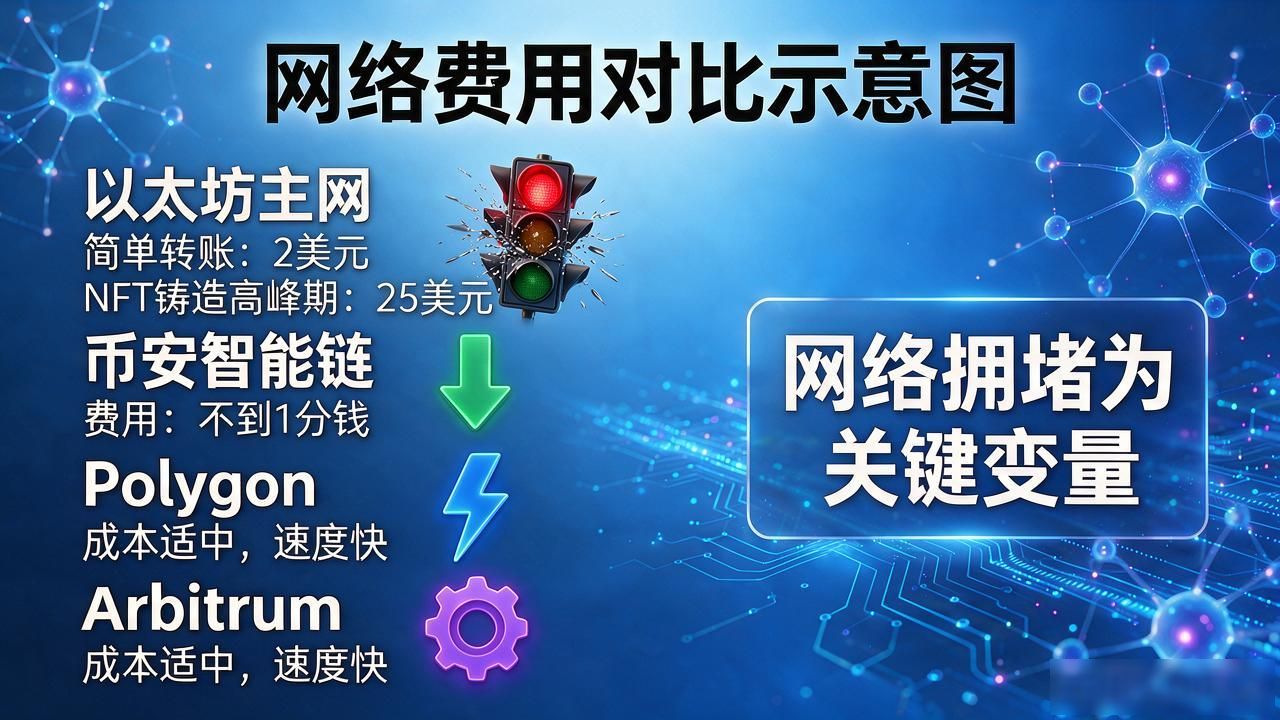
On Ethereum mainnet, a simple transfer might cost $2 on a quiet Tuesday but $25 during an NFT mint rush. Binance Smart Chain charges a fraction of a cent for the same action. Polygon and Arbitrum sit in the middle, delivering speed at moderate cost. Network congestion is the dominant variable here. During peak windows — after a major airdrop, a DeFi token launch, or a smart-contract exploit draining liquidity — validators fill each block with the highest-fee transactions, pushing lower fees to later blocks. Watching the gas tracker on Etherscan before sending a large amount is a habit worth building.
Trust Wallet gives you levers to pull. The speed selector — low, medium, high — maps to different priority fees and expected confirmation times. For a plain token transfer, there's no reason to max out the gas limit. For a multi-step DEX swap involving two tokens across different pools, the routing logic burns more gas,and the fee climbs accordingly. You can also route the same transaction through a layer-2 like Base or Arbitrum to slash the cost by 90 percent or more. The wallet displays an estimated fee before you confirmExploring the structure of Trust Wallet's network fees Trust Wallet Network Fees, Explained,but that estimate can lag by a few seconds during high-traffic periods.
One detail trips up many users: a failed or reverted transaction still consumes gas. If you set the gas limit too low and the smart contract revertsExploring the structure of Trust Wallet's network fees, you paid for the attempt and got nothing back. Trust Wallet now auto-estimates a safer gas amount, but for complex interactions — governance votes, NFT mints with multi-step logic — a quick manual check still helps. The fee structure isn't some hidden markup. It's a transparent stack of protocol rules,validator incentives, and real-time supply-and-demand pricing.